A brief guide to Section 136 for Emergency Departments
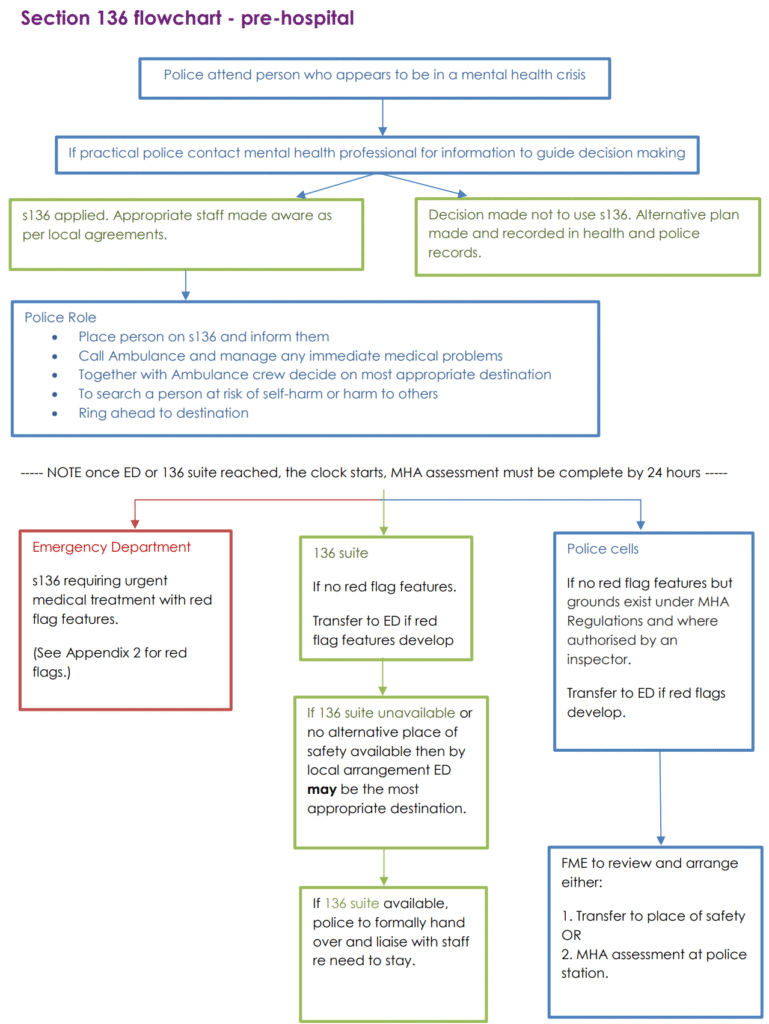
Section 136 when police can use emergency powers to take a person appears to be suffering from mental disorder from a public place to a place of safety. Section 136 cannot be used if the mentally disordered person is in a private dwelling or the private garden or buildings associated with that place.
Police stations can NEVER be used as a place of safety for under 18’s.
A police station can only be used for an adult if the detaining officer is satisfied that:
- the behaviour of the adult presents an imminent risk of serious injury or death to that adult or to others;
- as a result, no other place of safety in the police area in which the adult is located can reasonably be expected to detain them; and
- the use of a police station is authorised by an officer not below the rank of inspector.
- In addition, once at the police station:
- the adult will, so far as is reasonably practicable, have access to a healthcare professional throughout the period in which they are detained at the police station.
- will receive a healthcare check from a healthcare professional every half hour. (Not available in many police stations)
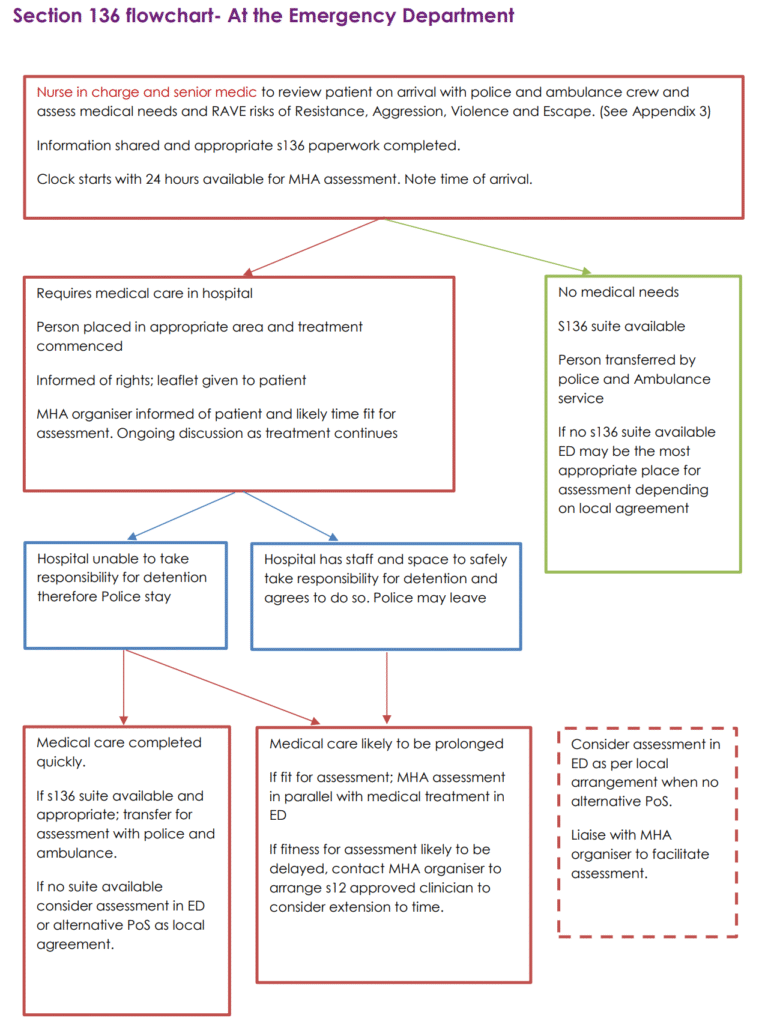
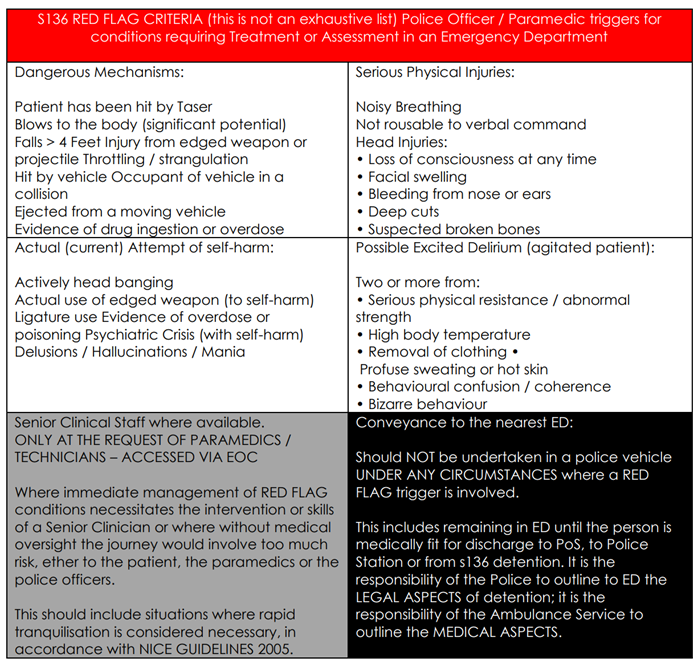
When a patient is brought to the ED under section 136 of the Mental Health Act; the nurse in charge and a senior clinician should review the patient with the police and ambulance crew to assess their medical needs and review their risks to self and others.
Referral for Mental Health Act assessment should occur on arrival in the ED or as soon as a patient is medically fit for assessment. Where possible medical treatment should occur alongside psychiatric assessment.
Police are responsible for the safety of a patient on a section 136. If an Emergency Department allows the police to leave, they take on this responsibility and should be confident they have staff and resources to deal with the risk of the patient absconding.
RCEM guidance: –