Plan, Do, Study, Act (PDSA) cycles and the model for improvement
What is it?
The model for improvement provides a framework for developing, testing and implementing changes leading to improvement. It is based on a scientific method and moderates the impulse to take immediate action with the wisdom of careful study.
Using PDSA cycles enables you to test out changes on a small scale, building on the learning from these test cycles in a structured way before wholesale implementation. This allows stakeholders to see if the proposed change will succeed and is a powerful tool for learning from ideas that do and don’t work. This way, the process of change is safer and less disruptive for patients and staff.
When to use it?
# When planning any improvement or change to work processes, it is essential to know what you want to achieve, how you will measure improvement and to be explicit about the idea to be tested.
# You may not get the results you expect so it is safer and more effective to test out improvements on a small scale before implementing them across the board.
How to use it?
The framework includes three key questions to answer before testing an improvement concept and a process for testing change ideas.
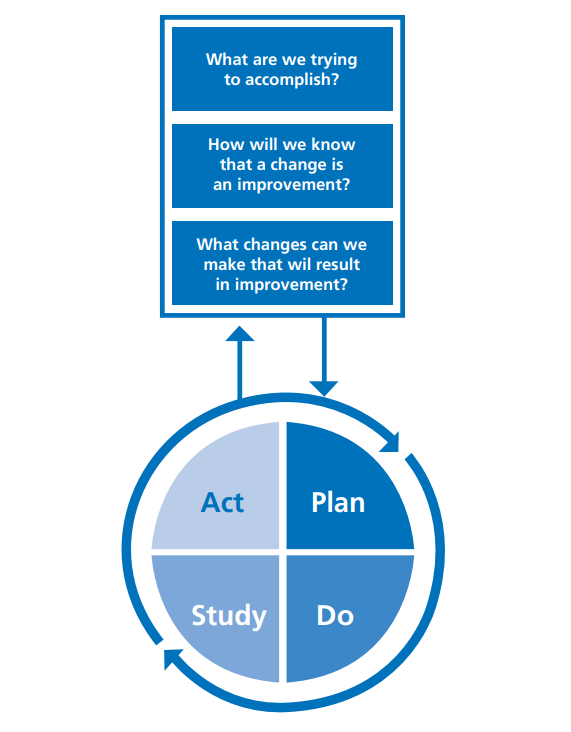
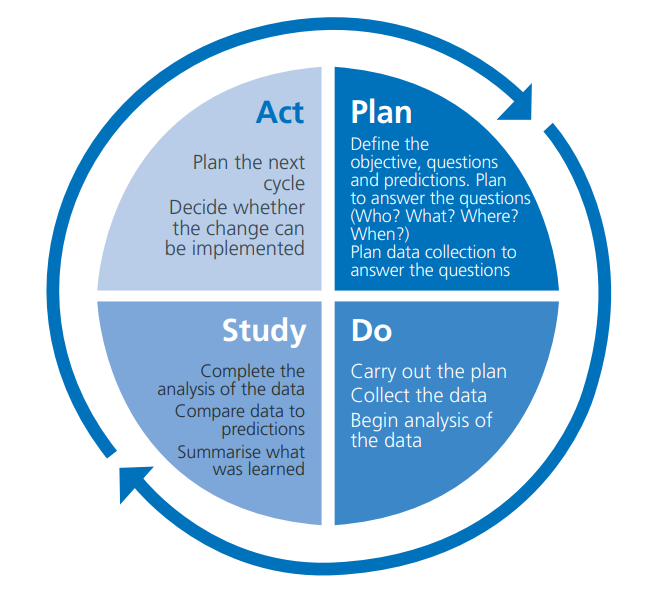
The four stages of the PDSA cycle are:
- Plan – the change to be tested or implemented
- Do – carry out the test or change
- Study – based on the measurable outcomes agreed before starting out, collect data before and after the change and reflect on the impact of the change and what was learned
- Act – plan the next change cycle or full implementation.
Step 1 – Start by answering the three essential questions.
What are we trying to accomplish? Teams need to set clear and focused goals with measurable targets. These goals require clinical leadership and should focus on problems that cause concern, as well as on patients and staff. They should be relevant to the length of the project and be bold in aspiration.
How do we know if the change is an improvement? To answer this question, you will need to measure outcomes such as a reduction in waiting time. If we make a change, this should affect the measures and demonstrate over time whether the change has led to sustainable improvement. The measures in this model are tools for learning and demonstrating improvement, not for judgment.
- Each project team should collect data to demonstrate whether changes result in improvement, reporting progress monthly on time series graphs known as run charts or statistical process control (SPC) charts.
- You may also want to undertake a qualitative analysis through patient questionnaires.
What changes can we make that will result in improvement? There are many potential changes your team could make. However, evidence from scientific literature and previous improvement programmes suggests that a small number of changes are most likely to result in improvement.
Step 2 – Sequential or Simultaneous PDSA cycles
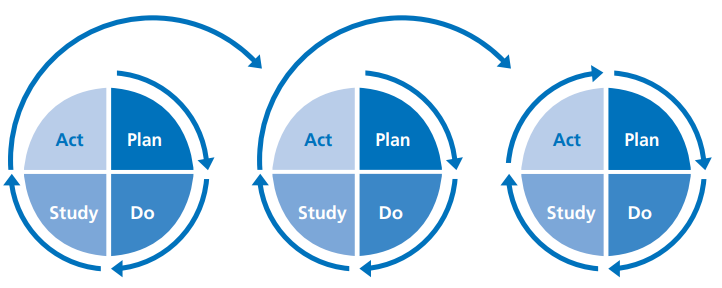
You should now start the PDSA cycle. There may be several PDSA cycles running sequentially, or even simultaneously.
Sequential cycles are common when the study reveals results that suggest a different approach is needed.
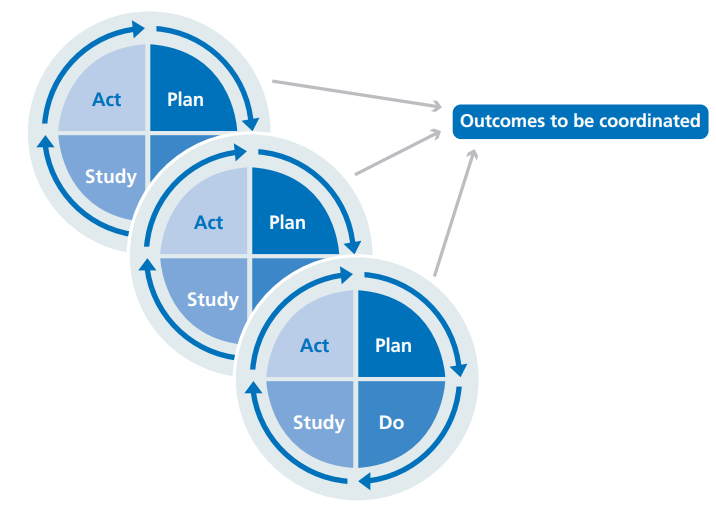
Simultaneous cycles may occur when the changes are more complex, possibly involving several departments. You should identify any interactions between simultaneous cycles, as a change in method in one cycle may alter the impact of another somewhere else.
Step 3 –
Record your PDSAs over time to capture the learning and to demonstrate the improvement journey, which is often lost or not recorded.
Tips: –
• Plan multiple cycles to test ideas.
• Test on a really small scale. For example, start with one patient or one clinician at a one-afternoon clinic and increase the numbers as you refine the ideas.
• Test the proposed change with people who believe in the improvement. Don’t try to convert people into accepting the change at this stage.
• Only implement the idea when you’re confident you have considered and tested all the possible ways of achieving the change.