Volvulus
Volvulus occurs when a loop of intestine twists around itself and the mesentery that supplies it, causing a bowel obstruction.
Symptoms include abdominal distension, pain, vomiting, constipation, and bloody stools.
The onset of symptoms may be insidious or sudden.
Abdominal x-ray – coffee-bean shape seen with the “apex” locating the origin of volvulus (e.g., sigmoid, caecal)
Sigmoid volvulus
X-ray: – dilated inverted U-shaped loop of colon projected towards the right side of abdomen. Characteristic signs are coffee bean sign or Frimann-Dahl sign (three dense lines converge towards the site of obstruction)

Management: –
- Early surgical review – high risk of perforation
- Flexible or rigid sigmoidoscopy with the insertion of a rectal tube may relieve obstruction and should be performed immediately after diagnosis, ensuring the affected segment is viable. The rectal tube is fixed & left in situ for 24 hours, and a repeat abdominal x-ray to ensure successful decompression.
- Where peritonitis or mucosal gangrene has been identified, emergency midline laparotomy is required.
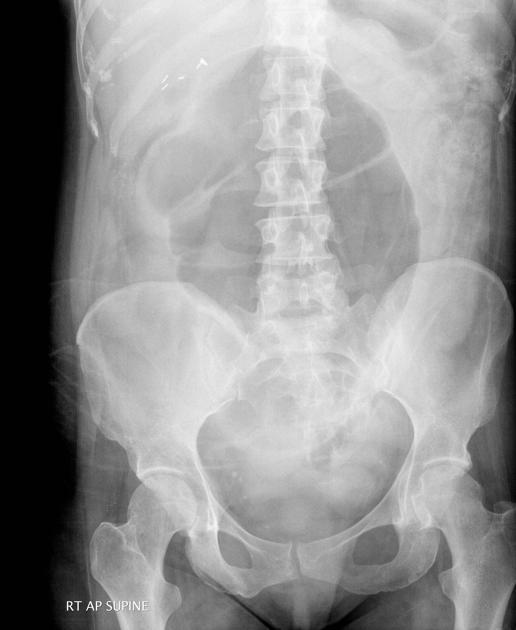
Caecal volvulus
X-ray: dilated Rt colon rotates to the left side & dilated small bowel may also be present.
Management: –
- Laparotomy is the primary treatment.
- Colonoscopic & percutaneous decompression has been attempted, but is reserved for patients who are not candidates for surgery.
Chilaiditi sign: the asymptomatic, usually incidental radiographic finding, in which a part of the intestine is located between the liver and the diaphragm. Hepatodiaphragmatic interposition of the intestine (HDI).

Chilaiditi syndrome: symptomatic hepatodiaphragmatic interposition associated with abdominal pain, nocturnal vomiting, anorexia, and abdominal distension.